Buy atletyc.eu ?
We are moving the project
atletyc.eu .
Are you interested in purchasing the domain
atletyc.eu ?
domain@kv-gmbh.de · 0541-91531010
Buy atletyc.eu ?
What are harmonic oscillations?
Harmonic oscillations are repetitive back-and-forth movements or vibrations that follow a specific pattern. They are characterized by a sinusoidal or wave-like motion, where the displacement of the oscillating object from its equilibrium position is proportional to the restoring force acting on it. Examples of harmonic oscillations include the swinging of a pendulum, the motion of a mass-spring system, and the vibrations of a guitar string. These oscillations are important in many areas of physics and engineering, as they can be used to describe and analyze various natural and mechanical systems. **
What are resonance-driven oscillations?
Resonance-driven oscillations occur when a system is subjected to an external force at its natural frequency, causing it to oscillate with increasing amplitude. This phenomenon is known as resonance, where the energy of the external force is transferred efficiently to the system, leading to large oscillations. Resonance-driven oscillations can be observed in various systems, such as mechanical, electrical, and acoustic systems, and are important in understanding the behavior of these systems under different conditions. **
Similar search terms for Oscillations
Top-Angebote
Products related to Oscillations:
-
Inspire Picks Intelligence Maze Gear Track Ball Logic Training Toy 1pcTurn playtime into a powerful learning experience. This engaging maze gear track ball toy challenges kids to think critically while guiding the ball through intricate tracks and moving gears. Designed as a fun logic training puzzle toy, it helps...34,93 $*Shipping: 0,00 $Secure redirect to the provider
-
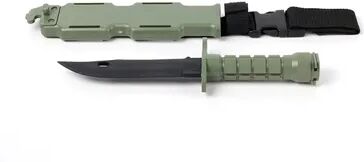
Modern Mode Marketplace Tactical Rubber Toy Knife Military Training & Game Gear blackStep up your tactical play with the Rubber Toy Knife designed for maximum realism and safety. Perfect for CS game enthusiasts, military training, or outdoor adventure roleplay, this M9 dagger replica combines durability with a lightweight feel....39,97 $*Shipping: 0,00 $Secure redirect to the provider
-
United Swimming Strength Training Belt With Elastic Resistance Cords Swim Workout Gear blackTake your swimming to the next level with the ultimate swimming training equipment. Designed for swimmers of all levels, this belt and elastic cord set helps build strength, improve endurance, and enhance stroke technique. Unlike standard swim...49,97 $*Shipping: 0,00 $Secure redirect to the provider
-
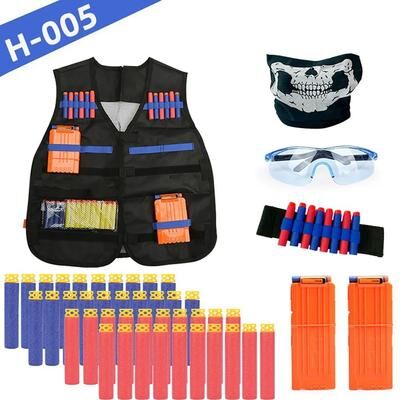
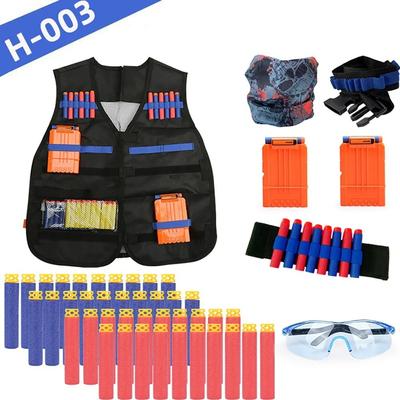
Uplift Picks Kids Nerf Tactical Vest Kit With Battle Gear And Protective Accessories 03Every mission feels more real when kids are fully geared up for action. This nerf tactical vest kit gives young players everything they need to jump straight into imaginative battles. Designed for comfort and durability, it keeps darts, clips, and...125,50 $*Shipping: 0,00 $Secure redirect to the provider



-
How do damped oscillations work?
Damped oscillations occur when an external force or frictional resistance acts upon a vibrating system, causing the amplitude of the oscillations to decrease over time. This damping effect gradually reduces the energy of the system, resulting in the oscillations eventually coming to a stop. The rate at which the oscillations decay is determined by the damping coefficient, with higher damping leading to faster decay. Damped oscillations are commonly observed in various systems, such as springs and pendulums, where energy is gradually dissipated due to external factors. **
-
How do you draw oscillations?
To draw oscillations, you can start by plotting a sinusoidal function on a graph. The function can be in the form of y = A*sin(Bx + C) or y = A*cos(Bx + C), where A is the amplitude, B is the frequency, and C is the phase shift. You can then plot the points on the graph by plugging in different values of x to see how the function oscillates. Additionally, you can use a ruler to connect the points to create a smooth oscillation curve. **
-
How can sinusoidal oscillations be modeled?
Sinusoidal oscillations can be modeled using mathematical equations that describe the amplitude, frequency, and phase of the oscillation. The most common way to model sinusoidal oscillations is through a sine or cosine function, such as y = A*sin(2πft + φ), where A is the amplitude, f is the frequency, t is the time, and φ is the phase shift. By adjusting these parameters, we can accurately represent the behavior of sinusoidal oscillations in various systems and phenomena. Additionally, sinusoidal oscillations can also be modeled using differential equations in the context of dynamic systems analysis. **
-
What are examples of damped oscillations?
Examples of damped oscillations include a swinging pendulum in a viscous fluid, a car's suspension system responding to bumps on the road, and the motion of a spring-mass system with air resistance. In each case, the oscillations gradually decrease in amplitude over time due to the dissipative forces present, such as friction or air resistance. The damping effect causes the system to eventually come to rest at its equilibrium position. **

What are the trigonometric functions in oscillations?
In oscillations, the trigonometric functions commonly used are sine and cosine functions. These functions describe the relationship between the angle of rotation and the position of an object undergoing oscillatory motion. The sine function represents the vertical component of the motion, while the cosine function represents the horizontal component. By using these trigonometric functions, we can analyze and predict the behavior of oscillatory systems. **
Does a wave consist of multiple oscillations?
Yes, a wave consists of multiple oscillations. In physics, a wave is a disturbance that travels through a medium, transferring energy without transferring matter. This disturbance causes particles in the medium to oscillate back and forth, creating a pattern of repeated motion. Therefore, a wave is made up of multiple oscillations as it propagates through the medium. **
Top-Angebote
Products related to Oscillations:
-
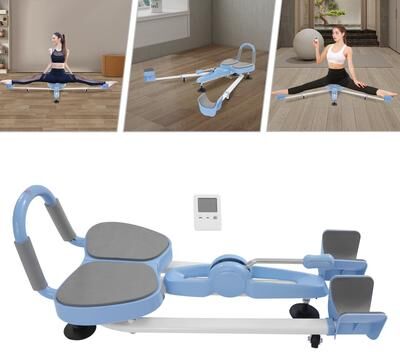
Healfit Counter Leg Stretcher, Fitness Split Training, Stretching Machine, Martial Arts Exercise Gear Leg Stretcher, Fitness Split Training, Stretching Machine, Martial Arts Exercise GearAchieve ultimate flexibility and lean, toned legs with our Stretching Machine Leg Stretcher. Made from highquality steel and ABS with a corrosionresistant finish, this durable machine ensures longlasting performance and safe workouts for all fitness...109,97 $*Shipping: 0,00 $Secure redirect to the provider
-
Uplift Picks Kids Nerf Tactical Vest Kit With Battle Gear And Protective Accessories 05Every mission feels more real when kids are fully geared up for action. This nerf tactical vest kit gives young players everything they need to jump straight into imaginative battles. Designed for comfort and durability, it keeps darts, clips, and...125,50 $*Shipping: 0,00 $Secure redirect to the provider
-
Inspire Picks Intelligence Maze Gear Track Ball Logic Training Toy 1pcTurn playtime into a powerful learning experience. This engaging maze gear track ball toy challenges kids to think critically while guiding the ball through intricate tracks and moving gears. Designed as a fun logic training puzzle toy, it helps...34,93 $*Shipping: 0,00 $Secure redirect to the provider
-
Modern Mode Marketplace Tactical Rubber Toy Knife Military Training & Game Gear blackStep up your tactical play with the Rubber Toy Knife designed for maximum realism and safety. Perfect for CS game enthusiasts, military training, or outdoor adventure roleplay, this M9 dagger replica combines durability with a lightweight feel....39,97 $*Shipping: 0,00 $Secure redirect to the provider
-
What are harmonic oscillations?
Harmonic oscillations are repetitive back-and-forth movements or vibrations that follow a specific pattern. They are characterized by a sinusoidal or wave-like motion, where the displacement of the oscillating object from its equilibrium position is proportional to the restoring force acting on it. Examples of harmonic oscillations include the swinging of a pendulum, the motion of a mass-spring system, and the vibrations of a guitar string. These oscillations are important in many areas of physics and engineering, as they can be used to describe and analyze various natural and mechanical systems. **
-
What are resonance-driven oscillations?
Resonance-driven oscillations occur when a system is subjected to an external force at its natural frequency, causing it to oscillate with increasing amplitude. This phenomenon is known as resonance, where the energy of the external force is transferred efficiently to the system, leading to large oscillations. Resonance-driven oscillations can be observed in various systems, such as mechanical, electrical, and acoustic systems, and are important in understanding the behavior of these systems under different conditions. **
-
How do damped oscillations work?
Damped oscillations occur when an external force or frictional resistance acts upon a vibrating system, causing the amplitude of the oscillations to decrease over time. This damping effect gradually reduces the energy of the system, resulting in the oscillations eventually coming to a stop. The rate at which the oscillations decay is determined by the damping coefficient, with higher damping leading to faster decay. Damped oscillations are commonly observed in various systems, such as springs and pendulums, where energy is gradually dissipated due to external factors. **
-
How do you draw oscillations?
To draw oscillations, you can start by plotting a sinusoidal function on a graph. The function can be in the form of y = A*sin(Bx + C) or y = A*cos(Bx + C), where A is the amplitude, B is the frequency, and C is the phase shift. You can then plot the points on the graph by plugging in different values of x to see how the function oscillates. Additionally, you can use a ruler to connect the points to create a smooth oscillation curve. **
Similar search terms for Oscillations
-
United Swimming Strength Training Belt With Elastic Resistance Cords Swim Workout Gear blackTake your swimming to the next level with the ultimate swimming training equipment. Designed for swimmers of all levels, this belt and elastic cord set helps build strength, improve endurance, and enhance stroke technique. Unlike standard swim...49,97 $*Shipping: 0,00 $Secure redirect to the provider
-
Uplift Picks Kids Nerf Tactical Vest Kit With Battle Gear And Protective Accessories 03Every mission feels more real when kids are fully geared up for action. This nerf tactical vest kit gives young players everything they need to jump straight into imaginative battles. Designed for comfort and durability, it keeps darts, clips, and...125,50 $*Shipping: 0,00 $Secure redirect to the provider
-
Uplift Picks Kids Nerf Tactical Vest Kit With Battle Gear And Protective Accessories 02Every mission feels more real when kids are fully geared up for action. This nerf tactical vest kit gives young players everything they need to jump straight into imaginative battles. Designed for comfort and durability, it keeps darts, clips, and...96,50 $*Shipping: 0,00 $Secure redirect to the provider
-
Modern Mode Marketplace Tactical Rubber Toy Knife Military Training & Game Gear greenStep up your tactical play with the Rubber Toy Knife designed for maximum realism and safety. Perfect for CS game enthusiasts, military training, or outdoor adventure roleplay, this M9 dagger replica combines durability with a lightweight feel....39,97 $*Shipping: 0,00 $Secure redirect to the provider
-
How can sinusoidal oscillations be modeled?
Sinusoidal oscillations can be modeled using mathematical equations that describe the amplitude, frequency, and phase of the oscillation. The most common way to model sinusoidal oscillations is through a sine or cosine function, such as y = A*sin(2πft + φ), where A is the amplitude, f is the frequency, t is the time, and φ is the phase shift. By adjusting these parameters, we can accurately represent the behavior of sinusoidal oscillations in various systems and phenomena. Additionally, sinusoidal oscillations can also be modeled using differential equations in the context of dynamic systems analysis. **
-
What are examples of damped oscillations?
Examples of damped oscillations include a swinging pendulum in a viscous fluid, a car's suspension system responding to bumps on the road, and the motion of a spring-mass system with air resistance. In each case, the oscillations gradually decrease in amplitude over time due to the dissipative forces present, such as friction or air resistance. The damping effect causes the system to eventually come to rest at its equilibrium position. **
-
What are the trigonometric functions in oscillations?
In oscillations, the trigonometric functions commonly used are sine and cosine functions. These functions describe the relationship between the angle of rotation and the position of an object undergoing oscillatory motion. The sine function represents the vertical component of the motion, while the cosine function represents the horizontal component. By using these trigonometric functions, we can analyze and predict the behavior of oscillatory systems. **
-
Does a wave consist of multiple oscillations?
Yes, a wave consists of multiple oscillations. In physics, a wave is a disturbance that travels through a medium, transferring energy without transferring matter. This disturbance causes particles in the medium to oscillate back and forth, creating a pattern of repeated motion. Therefore, a wave is made up of multiple oscillations as it propagates through the medium. **
* All prices are inclusive of VAT and, if applicable, plus shipping costs. The offer information is based on the details provided by the respective shop and is updated through automated processes. Real-time updates do not occur, so deviations can occur in individual cases. ** Note: Parts of this content were created by AI.